 Mini project 6 · CMU 16-720
Photometric stereo.
Recovering the shape of an object from how it appears under different lighting directions, first with the lights known, then without them, where the problem becomes genuinely ambiguous in an interesting way.
Rendering the n-dot-l lighting
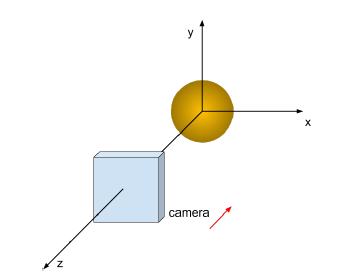
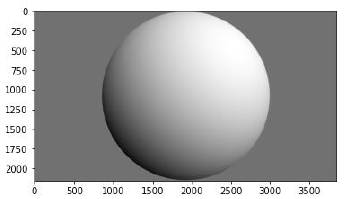
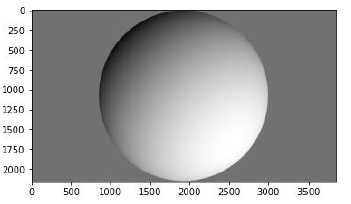
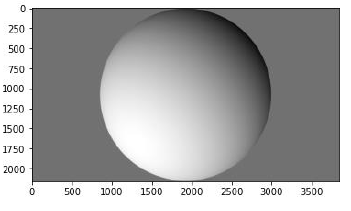
Photometric stereo recovers the shape of an object from its appearance under a set of lighting directions. This implementation assumes a Lambertian object imaged with an orthographic camera. To build up the forward model first: for a fully reflective Lambertian sphere centered at the origin, with an orthographic camera placed away from it and three different incoming lighting directions, I simulate the sphere's appearance under the n-dot-l model.
Calibrated photometric stereo
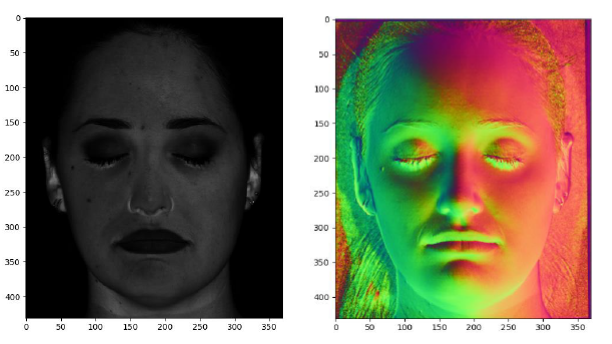
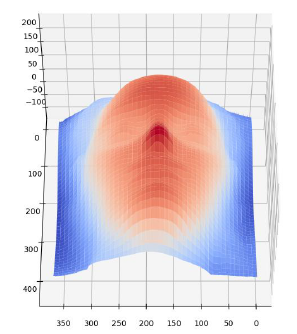
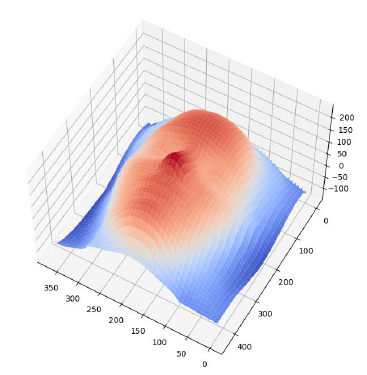
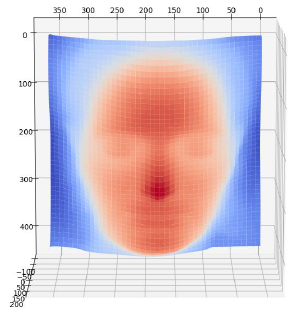
Given seven images of a face lit from different directions, with the ground-truth lighting directions, I invert the image formation model. From the images I recover the surface albedo, which indicates how much light hitting the surface is reflected rather than absorbed, and the surface normals, which encode the depth. Integrating the normals with a special case of the Frankot-Chellappa algorithm to enforce integrability then gives the depth, and the reconstructed shape of the face.
Uncalibrated, and the bas-relief ambiguity
With no given lighting directions, I estimate the shape directly from the face images. The lighting directions are estimated by decomposing the matrix with SVD, which introduces a linear ambiguity known as the bas-relief ambiguity. Bas-relief is the old sculpting technique of flattened figures protruding from a wall that, viewed from the right angle, look full-depth.
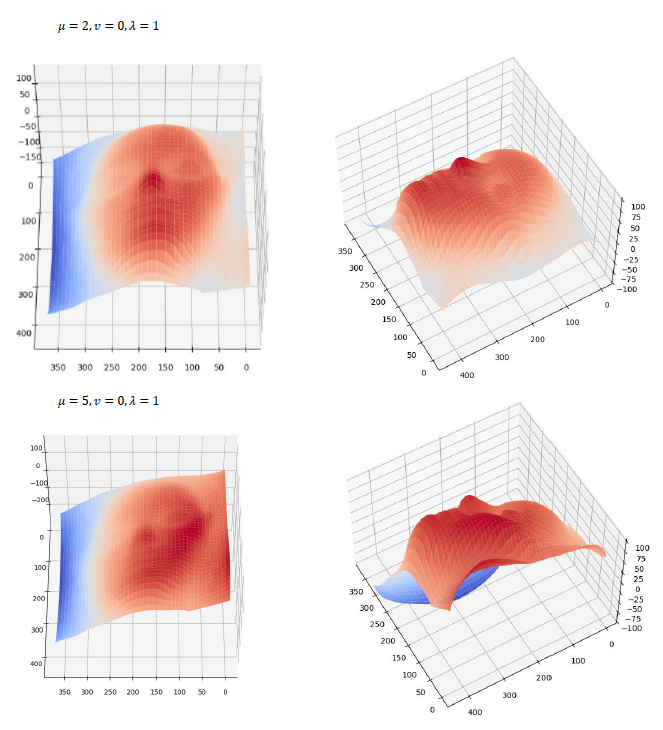
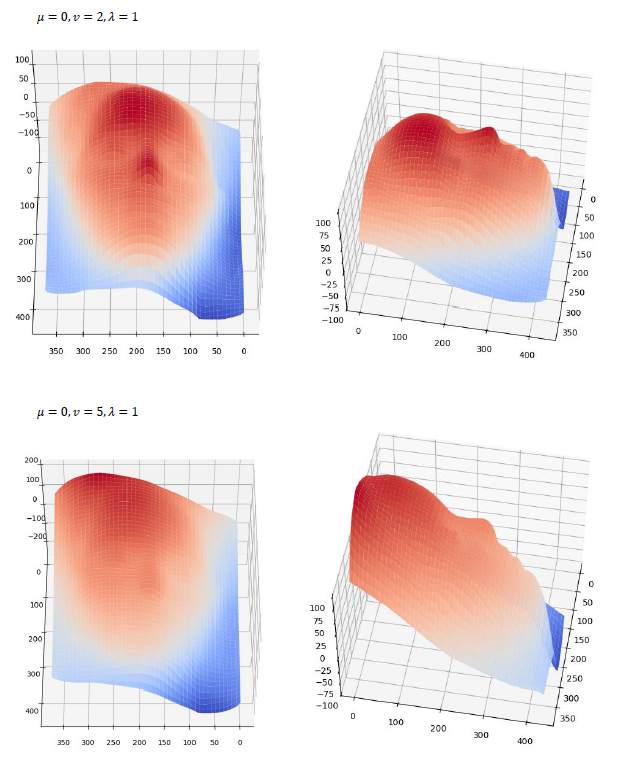
After enforcing integrability with Frankot-Chellappa, the reconstruction looks very similar to the calibrated one, but is only resolved up to a family of transformations: for any parameters greater than zero there is a set of integrable pseudonormals producing the same appearance. This is not a flaw in the implementation but a real property of the problem. Without knowing the lights, the images genuinely cannot distinguish between a family of shapes.
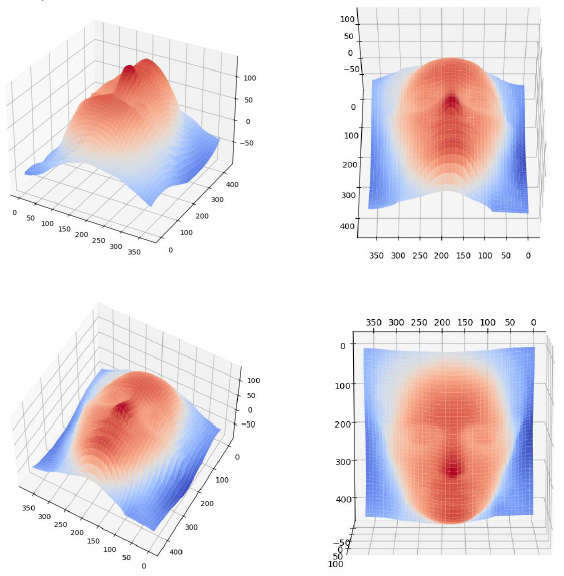
Examples of varying those parameters are shown below, some of which look identical to the original when viewed from a particular angle.